Blog
There are plenty of gate companies out there — but very few that combine technical expertise, quality workmanship, and genuine customer care.
Electric gates provide an excellent combination of security, convenience and controlled access for residential and commercial properties. From automated driveway entrances to large commercial security gates, these systems make it easier to manage who enters a property while reducing the need for manual gate operation.
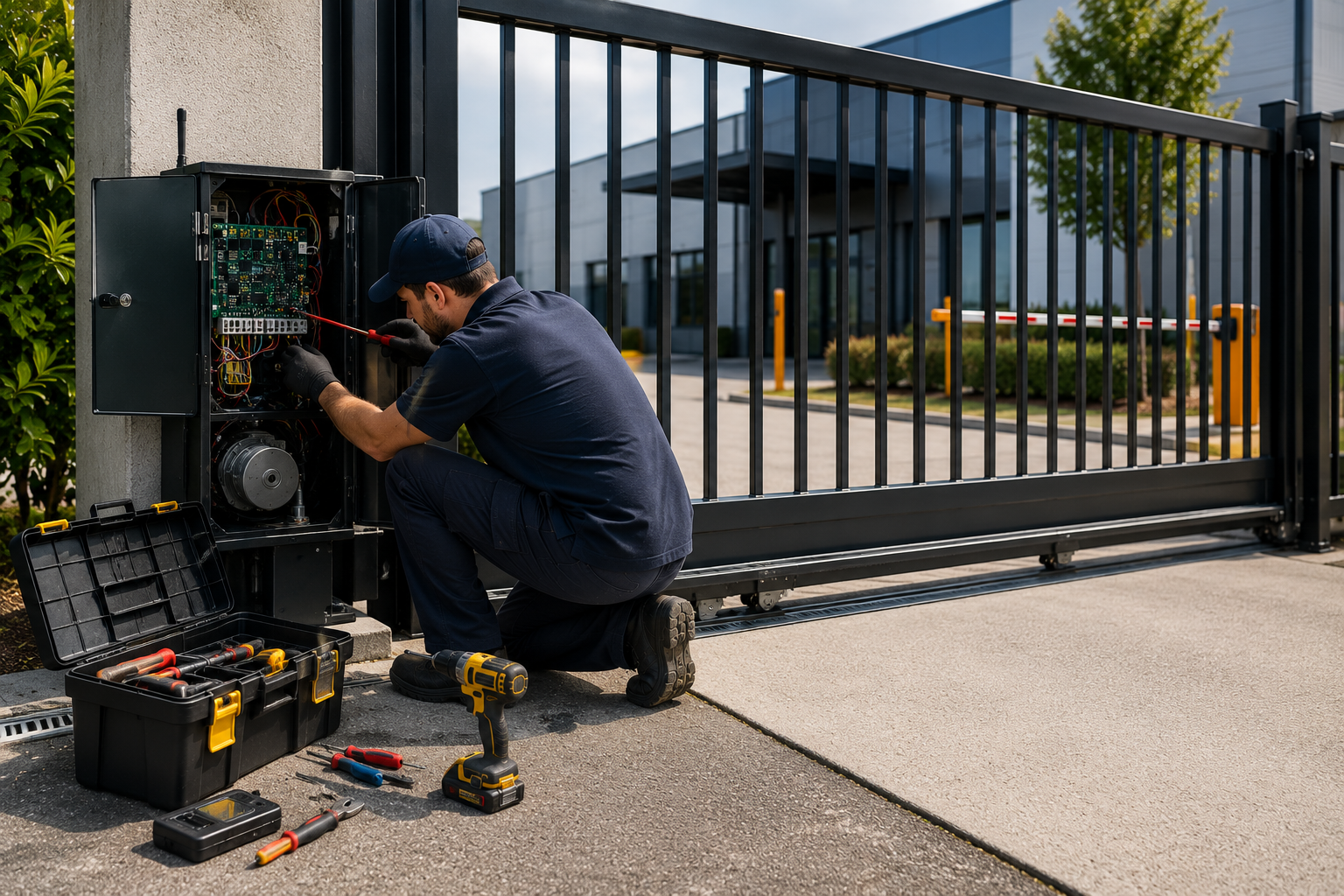
However, an electric gate is a complex system. It combines mechanical components, motors, electrical wiring, safety devices and access controls. When one of these components develops a fault, the entire system can become unreliable.
A gate that refuses to open can leave vehicles trapped inside a property. A gate that will not close can create an immediate security concern. Other problems, such as unusual noises, slow movement or repeated reversing, may initially seem minor but can indicate an underlying mechanical or electrical issue.
For property owners, understanding the common causes of electric gate failures can help identify when a simple check may be appropriate and when professional electric gate repair is necessary. Auckland’s changeable weather, rainfall, humidity and coastal conditions can also place additional stress on outdoor gate equipment, particularly electronics, tracks and metal components.
This guide explores the most common electric gate problems and the professional solutions that can help restore safe and reliable operation.
An automated gate works through a combination of different systems. The motor provides movement, the control board processes commands, sensors monitor obstacles, and mechanical components support the gate’s physical movement.
Because these components work together, a problem in one area can affect the entire system.
For example, a sliding gate may appear to have a motor problem when the real issue is debris creating excessive resistance in the track. Similarly, a gate that will not close may have a functioning motor but a faulty or misaligned safety sensor.
This is why professional electric gate repair in Auckland should focus on diagnosing the underlying cause rather than simply resetting the automation system. Common Auckland repair services regularly identify faults involving motors, control boards, power supplies, safety beams, remotes, rollers and tracks.
One of the most common problems is a gate that does not respond when the user presses a remote, keypad or other access device.
Several issues can cause this problem. The power supply may be interrupted, a circuit breaker may have tripped, a fuse may have failed or the control board may not be receiving the required power. In other cases, the problem may be related to the remote control, receiver or gate motor.
The best initial approach is to check obvious external factors. Property owners can confirm that the system has power and check whether the remote battery needs replacement. If the gate still does not respond, professional diagnosis is recommended.
Technicians can test the electrical supply, control board, motor and access devices to identify the actual source of the problem. Repair services in Auckland commonly report power supply faults, failed control boards and motor issues among the reasons automated gates stop responding.
A gate that starts moving but stops before completing its cycle can be particularly frustrating.
This problem may be caused by a physical obstruction, excessive resistance or a safety device being activated. On sliding gates, stones, leaves and other debris can interfere with the track. Worn rollers can also create enough resistance to make the system stop.
Safety beams can cause similar behaviour. If the sensors detect an obstruction, whether real or false, the automation system may stop or reverse the gate as a safety precaution.
Professional automatic gate repair involves checking both the mechanical movement and the safety system. Technicians inspect the track, rollers, limit settings and sensors before determining the appropriate repair.
A gate that repeatedly stops or reverses should not simply have its force settings increased to overcome the problem. The underlying cause should be identified and corrected.
Sometimes the motor can be heard operating, but the gate itself remains stationary.
This often indicates a problem with the connection between the motor and the physical gate mechanism. Depending on the system, possible causes can include worn gears, damaged racks, failed clutches or an incorrectly engaged manual release mechanism.
A stripped drive component may prevent the motor’s movement from being transferred effectively to the gate.
Professional gate motor repair begins with inspecting the motor and its mechanical connection to the gate. In some situations, replacing a specific damaged component is sufficient. If the motor itself is severely worn or no longer reliable, replacement may be the more practical solution.
A proper assessment is important because replacing an entire motor unnecessarily can be more expensive than repairing the actual faulty component.
An electric gate should generally move smoothly and consistently. When a gate begins moving slowly, jerking during operation or appearing to struggle, it is often experiencing increased resistance.
For a sliding gate, debris in the track or worn rollers may be responsible. A swing gate may develop problems with hinges or alignment. Corrosion and inadequate maintenance can also affect the movement of mechanical components.
The motor then has to work harder to move the gate. Over time, this additional strain can contribute to further damage.
Professional repair technicians inspect the entire movement system rather than focusing only on the motor. Cleaning the track, replacing damaged rollers, adjusting alignment and servicing mechanical components may restore smooth operation.
Auckland’s wet and humid conditions can contribute to corrosion and debris accumulation, making regular maintenance particularly valuable for outdoor automated gates.
Strange noises are often one of the earliest warning signs of an electric gate problem.
Grinding may indicate worn gears, rollers or bearings. Squeaking can result from dry hinges or other moving parts that require servicing. Clicking or humming without proper movement may indicate an electrical or motor-related issue.
Ignoring unusual sounds can allow a relatively minor fault to develop into a larger repair.
If a gate becomes noticeably louder than usual, property owners should arrange an inspection before the system stops working completely. Repair specialists can identify worn mechanical components and determine whether adjustment, lubrication or replacement is required.
Not every electric gate problem originates from the gate itself. Sometimes the motor and mechanical system are functioning correctly, but the access device is unable to send the appropriate command.
Common causes include flat remote batteries, programming problems, signal interference, receiver faults and damaged keypads.
A simple battery replacement may resolve some remote control issues. However, if multiple remotes stop working or the signal range suddenly becomes significantly shorter, the receiver or antenna may require professional attention.
Technicians can test the access control system, reprogram compatible devices and diagnose faults affecting the communication between the remote and the gate.
Access devices such as keypads and GSM systems may also experience software or hardware problems that require specialist repair.
Safety sensors are among the most important components of an automated gate system.
Photoelectric sensors typically create a beam across the gate opening. When that beam is interrupted, the system can stop or reverse the gate to help prevent a collision.
However, outdoor sensors can become dirty or misaligned. Dust, moisture, cobwebs and accidental impacts can interfere with their operation.
A gate may refuse to close or repeatedly reverse because the system incorrectly detects an obstruction.
Cleaning visible dirt from accessible sensor surfaces may be a reasonable basic check. However, persistent safety faults require professional attention.
Safety systems should never be bypassed simply to make a gate operate. WorkSafe New Zealand has highlighted the serious risks associated with automated gates that do not have appropriate safety measures or fail to protect people during gate movement.
Electric gates operate outdoors throughout the year, which means electronic components must be protected from environmental exposure.
Heavy rain, humidity and moisture can affect wiring, control boards and electrical connections. Water entering an inadequately sealed enclosure may cause corrosion, intermittent faults or complete system failure.
Property owners may notice unpredictable operation, error messages or a gate that works inconsistently after periods of heavy rainfall.
Professional electric gate repair Auckland services can inspect enclosures, wiring and electronic components for signs of moisture damage. Simply replacing a damaged control board without correcting the source of water ingress may result in the same problem occurring again.
Proper sealing and protection of electronic components are important for reliable long-term gate performance.
Gate alignment is essential for smooth and reliable operation.
A sliding gate may become misaligned because of ground movement, impact damage or worn support components. Swing gates can sag when hinges, posts or structural components no longer support the gate correctly.
Signs of alignment problems include uneven gaps, scraping, dragging and increased resistance during movement.
Operating a misaligned gate can place excessive pressure on the automation motor.
Professional repair solutions may involve adjusting the gate position, repairing or replacing hinges, servicing rollers or correcting structural support issues. The right solution depends on the cause of the misalignment.
Early repair can help prevent unnecessary damage to the motor and other automation components.
The control board acts as the central command system for an automated gate.
It receives signals from remotes and access devices while managing motor operation, safety sensors and opening and closing limits.
Control board faults can cause unpredictable behaviour. The gate may respond to some commands but not others, stop unexpectedly or fail to complete its operating cycle.
Electrical surges, moisture, ageing components and damaged wiring can all contribute to control board problems.
Because control boards are sophisticated electronic components, diagnosis should generally be carried out by an experienced technician. A professional can determine whether the issue is genuinely the control board or another component that is affecting the system.
Power surges can damage sensitive electronic components, including gate motors, transformers and control boards.
Storm activity and electrical disruptions can sometimes result in a gate that suddenly stops operating after previously functioning normally.
A professional inspection can identify damaged components and determine whether repairs or replacements are necessary.
For properties that experience recurring electrical issues, appropriate surge protection may help reduce the risk of future damage.
Professional Auckland gate repair services identify storm and power surge damage as a common source of electrical gate faults.
Mechanical wear is unavoidable in a gate that operates regularly.
Sliding gates depend on tracks, wheels and rollers to move efficiently. Swing gates rely on properly functioning hinges and structural supports.
As these components wear, the gate may become noisier and require more force to operate.
The motor can eventually become overloaded if it is continuously forced to compensate for mechanical resistance.
Regular inspections allow worn components to be identified before they cause a complete breakdown. Professional electric gate repair may include roller replacement, hinge adjustment, track repair and other mechanical work.
Some basic checks can help identify obvious issues. For example, property owners can check whether a remote battery is flat, look for visible obstructions or clean accessible debris from a sliding gate track.
However, certain problems require immediate professional attention.
These include electrical faults, damaged wiring, overheating motors, repeated gate failures, safety sensor problems and gates that behave unpredictably.
A gate that fails to detect obstacles should not continue to be used until its safety system has been inspected. WorkSafe New Zealand specifically warns that automated gates can create serious crushing and trapping hazards when appropriate safety protections are not in place or are not functioning correctly.
Professional technicians have the equipment and experience to diagnose problems involving motors, electrical systems and safety equipment safely.
Many electric gate failures develop gradually.
A roller may become worn before the motor begins struggling. A sensor may become dirty before the gate starts reversing. A small amount of water ingress may occur before the control board fails completely.
Preventive maintenance helps identify these issues earlier.
Regular servicing may include inspecting mechanical components, checking safety systems, cleaning relevant areas, testing the motor and reviewing the condition of electrical equipment.
For Auckland properties, routine maintenance is particularly useful because outdoor gates are exposed to changing weather conditions throughout the year. Industry maintenance guidance consistently identifies debris, moisture, corrosion and mechanical wear as common contributors to automated gate problems.
The right repair service should be able to diagnose the complete gate system rather than focusing on one component alone.
An electric gate involves mechanical, electrical and automation technology, so the repair process should consider the interaction between all these elements.
When selecting a professional service, property owners should look for experience with the relevant gate type, whether sliding or swing, as well as knowledge of motors, safety systems and access controls.
A detailed inspection helps identify the actual source of the fault and can prevent unnecessary component replacement.
For residential and commercial properties, professional repair also helps ensure the gate continues operating safely after the work is completed.
An electric gate provides security and convenience, but reliable performance depends on the condition of its mechanical, electrical and safety systems.
Problems such as motor failure, blocked tracks, damaged rollers, faulty sensors, remote control issues and electrical faults can all prevent an automated gate from working correctly.
The most important step is identifying the actual cause of the problem rather than applying a temporary solution. A gate that repeatedly stops, reverses or struggles to move may be warning of a mechanical or electrical fault that requires professional attention.
For property owners looking for reliable electric gate repair in Auckland, regular maintenance and early professional diagnosis can help reduce unexpected breakdowns, extend the life of the automation system and maintain the security of the property.
A well-maintained electric gate should provide smooth, safe and dependable operation for years while continuing to protect one of the most important access points to your home or business.